This week we have been set a two-week challenge to produce a new creative artefact from a randomly generated theme.
The theme comes from a randomly selected card from the board game Dixit (Libellud. 2008) shown below in figure 2. It's a surrealist image that serves as a starting point for inspiration for ideation.
We were also able to select a news article of our choice to either mix with or replace the image, but I decided to stick with the card.
I absolutely love this kind of challenge!
The Dixit Card
First stage ideation - interpretation using Crazy Eights
This time around, I wanted to approach the challenge with a couple of different types of ideation. When I initially looked at the card, I had some reactionary thoughts about it, so I decided to use Crazy Eights to develop it further.
This part of the ideation wasn't exactly about generating ideas for my artefact but to give me a better starting point from interpreting the card.
Crazy Eights turned out super useful (figure 3).
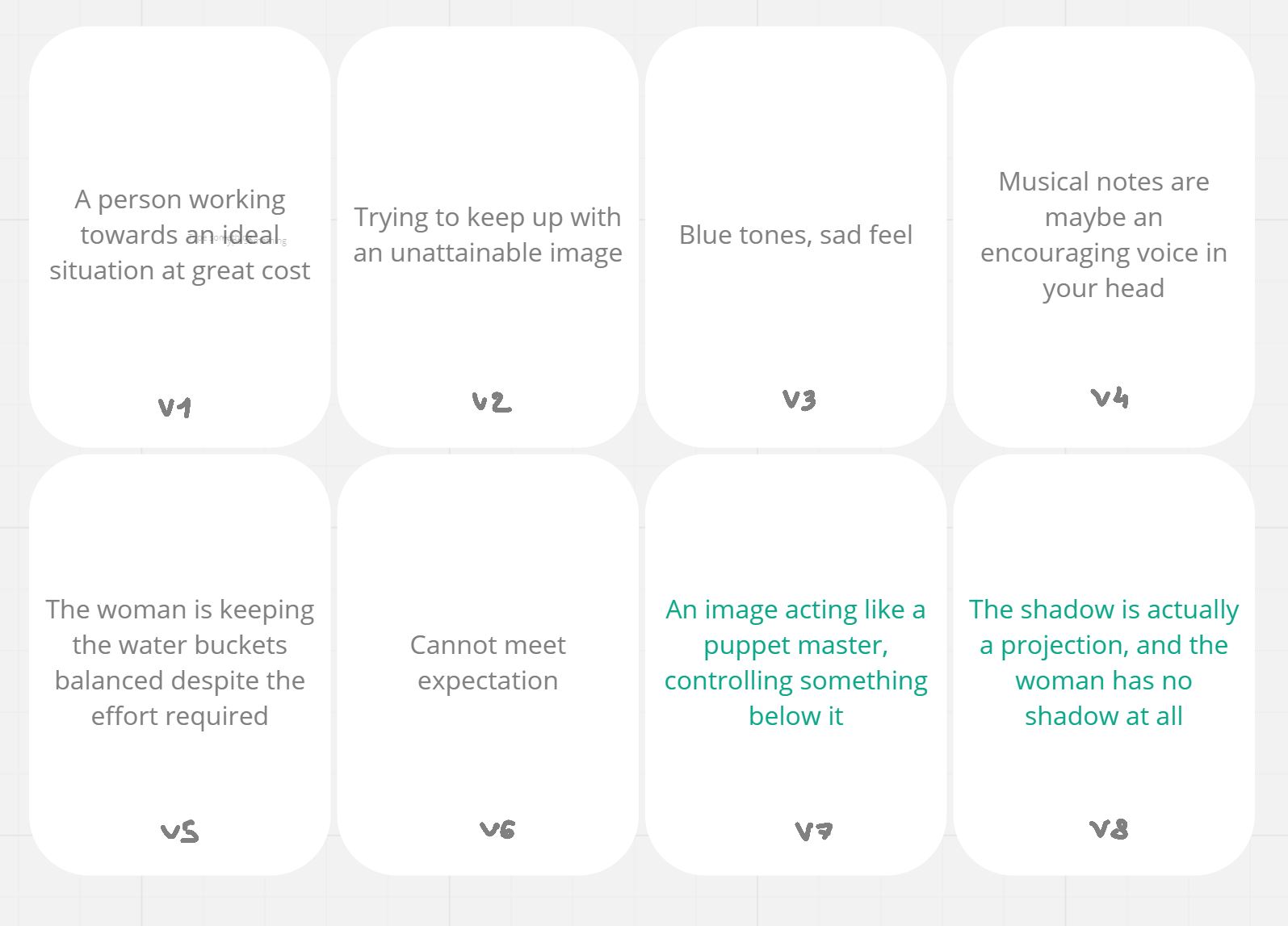
I started with my initial gut reactions, followed that with some flat ideas, and ended up seeing the card in a way that immediately set the ideas going. Instead of a shadow, I saw it as a projection of an image. This gave me a starting point for my game mechanic:
A projected image controlled by an invisible force
This is a really great starting point for ideating a game, but I also wanted to include a diversifier. This is something to help explore interesting ideas from restrictive conditions. I selected one from the Falmouth rapid ideation how-to page, which has been adapted from the last three editions of Global Game Jam (Global Game Jam Inc. 2021).
Language-independence – create an artefact that can be understood regardless of which language the player speaks.
Second stage ideation - game mechanic using SCAMPER
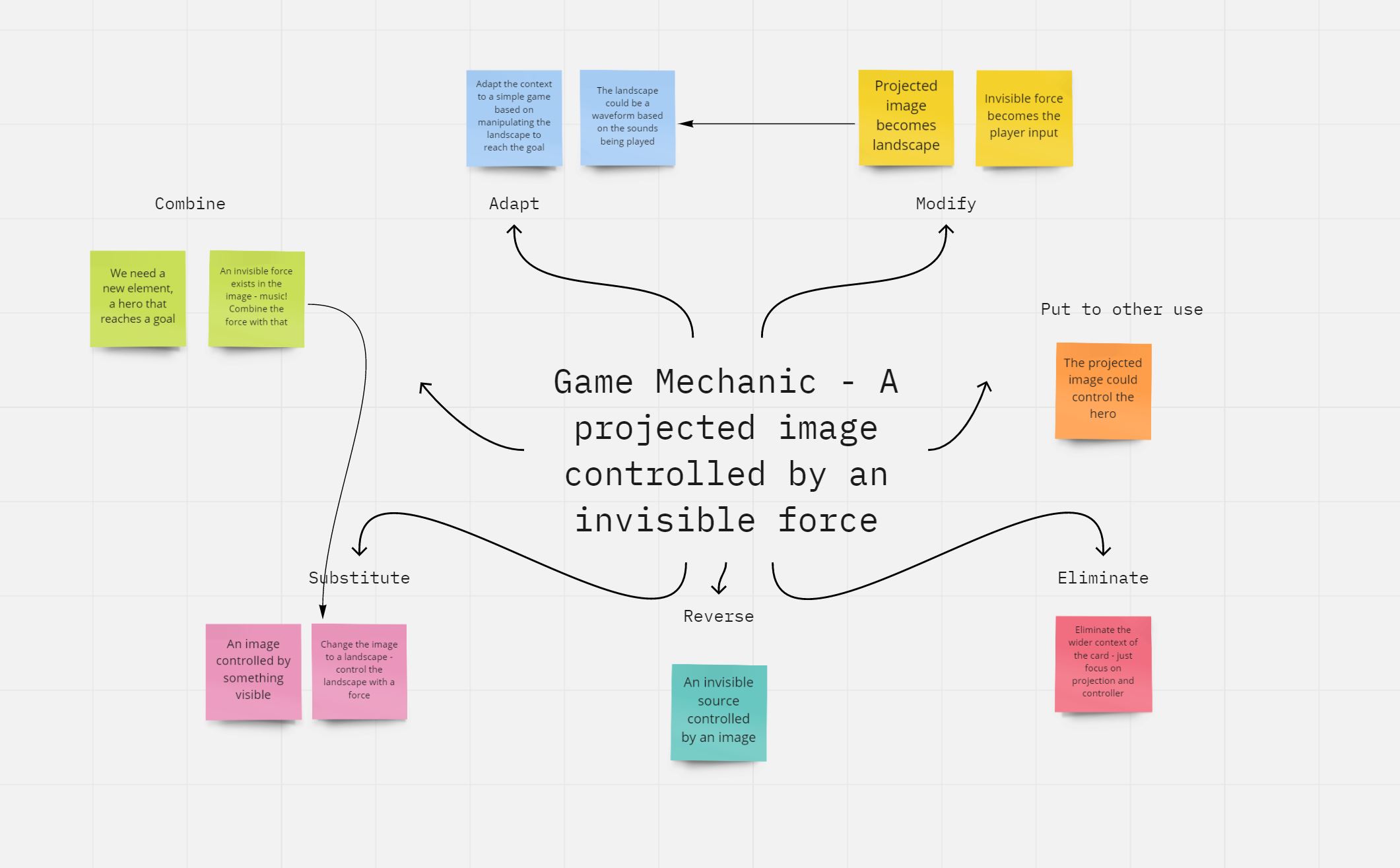
I had two goals when setting out to use SCAMPER to develop a game mechanic (figure 4). The first is to find ideas that go beyond my initial ones, and the second is to identify an idea I can produce in the time I have available.
SCAMPER was really useful in piecing together fragments of ideas into something that started to take shape. Below are the full results, with the ones in bold kept for the final idea:
Substitute
- An image controlled by something visible
- Change the image to a landscape - control the landscape with a force
Combine
- We need a new element, a hero that reaches a goal
- An invisible force exists in the image - music! Combine the force with that
Adapt
- Adapt the content to a simple game based on manipulating the landscape to reach the goal
- The landscape could be a waveform based on the sounds being played
Modify
- The projected image becomes a landscape
- Invisible force becomes the player input
Eliminate
- Eliminate the wider context of the card - focus on projection and controller.
Reverse
- An invisible source controlled by an image
Some fully formed ideas start to emerge.
From Crazy Eights and SCAMPER, I had a couple of viable ideas with two front runners:
| Game idea 1 | Game idea 2 |
| A game where you have to match the shadow background with a waveform. You manipulate that waveform by playing sounds. | A game where you control the landscape itself to move an object to a goal. The landscape is a projection, and you move it with an invisible force, in this case, musical notes. Getting the timing right will be crucial in getting over obstacles etc. |
So, next up, I had to consider project management and timing. I have limited time to produce the above, and I'm not very experienced with Unity's sound engine. While I considered I could create something that gave the impression of using sound, a waveform was not viable in the time available.
So idea number two was the one for me.
Final gameplay mechanic brief
Move the ball to the goal. Play sounds to change the ground.
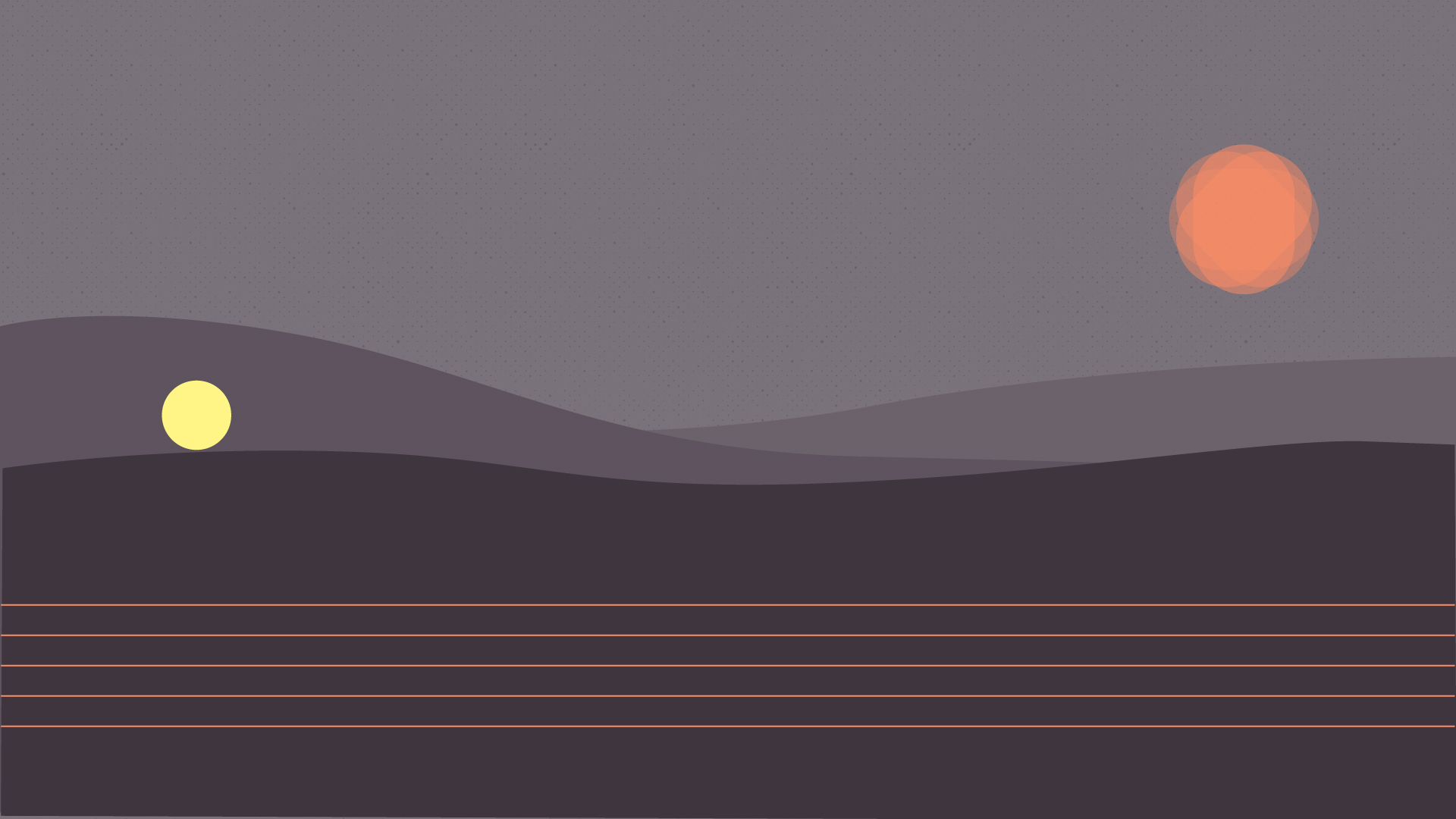
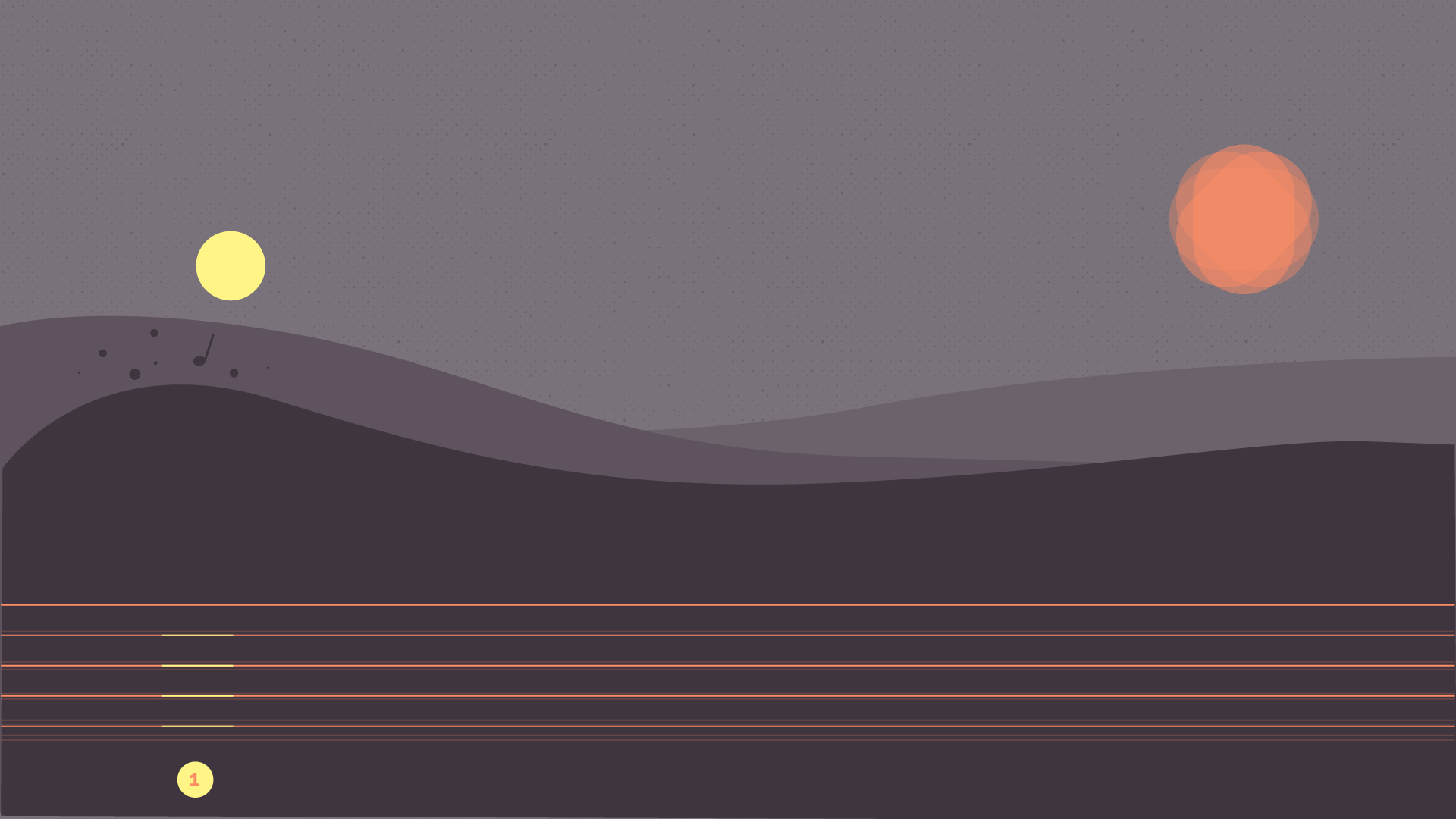
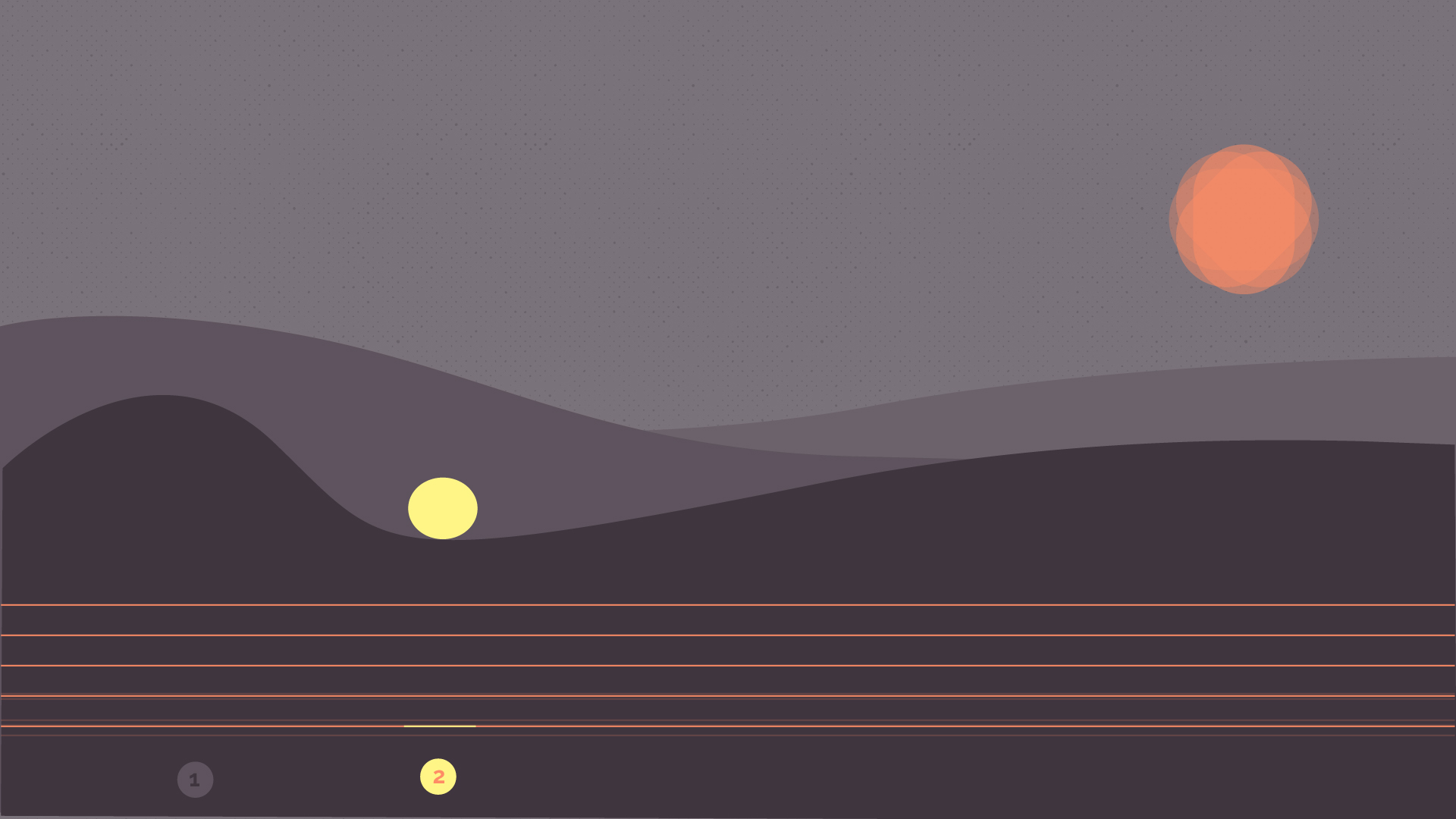
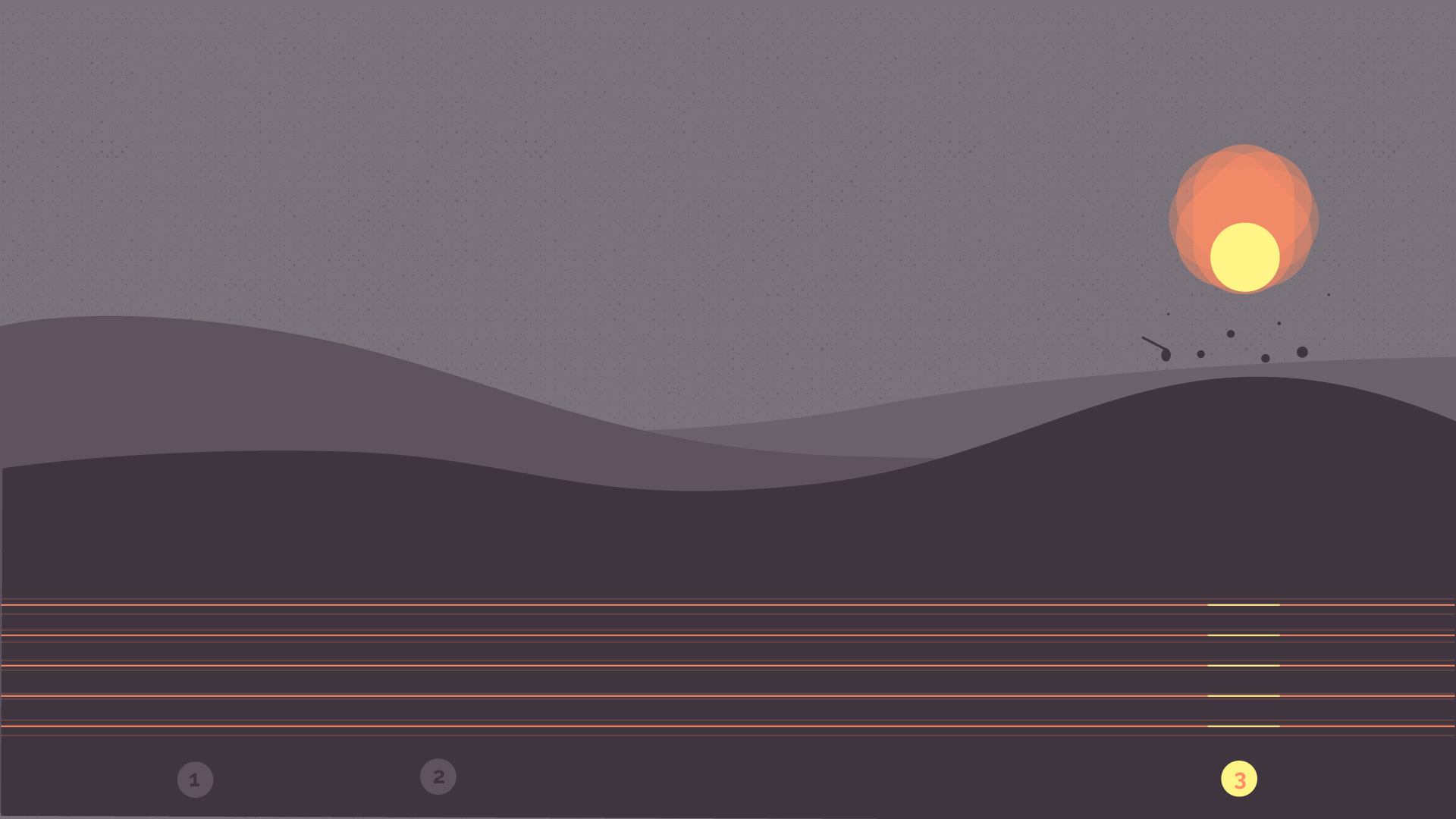
The player presses on a soundboard at the bottom of the screen, which lowers and raises the ground depending on the note. So the ground itself is projected based on the sound.
Agile management
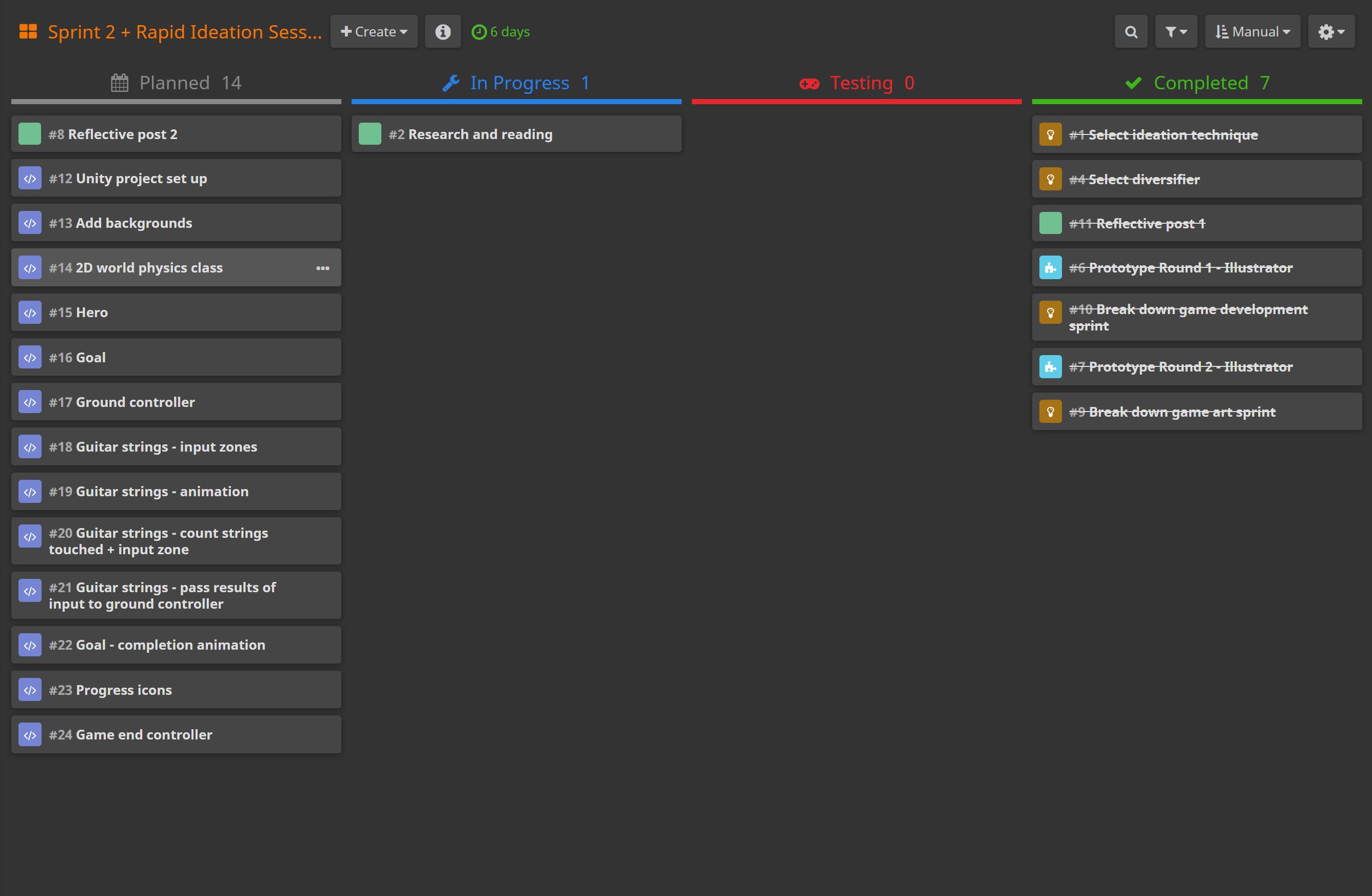
Next up, project management and prototyping. I've used agile and, in particular, the kanban board website hacknPlan (figure 5) to manage my project. Agile is a really useful methodology that I'm used to using professionally. It's really useful during rapid ideation, as it allows for changing requirements and regular evaluation (Agilemanifesto.org. 2001).
Another really important consideration at this stage is the minimal viable product. A minimal viable product is when you build the bare minimum product you can to test your business. When it comes to games, it's similar, but the MVP relates to how simple your game can be without losing the essence of your idea.
A minimum viable game is similar: you need to build the bare minimum game experience necessary to prove that people find your core game mechanic engaging (York, 2012)
It's a critical consideration for me during rapid ideation because of the time constraints of the exercise.
Prototype V1
I started prototyping in Adobe Illustrator to try and measure how the functionality could work. This particular gameplay mechanic is quite visual, so it required a visual editor to prototype in.
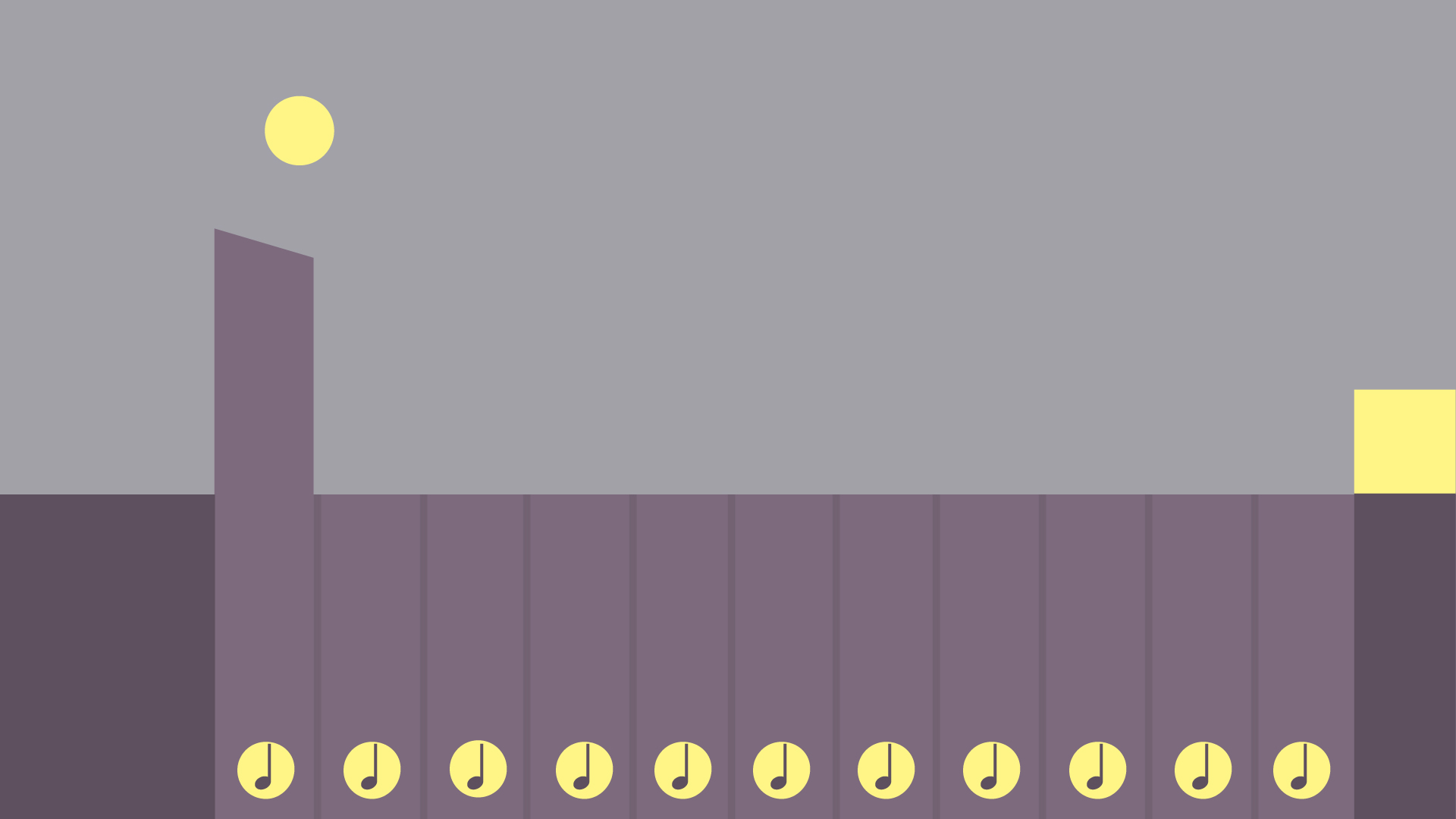
My initial prototype has a piano-like input, where the player presses the "keys", and the ground shoots up (figure 6). This didn't feel right to me. It doesn't really appear as though you are projecting something, and it was really important that the mechanic embodied that idea.
Prototype V2
I'm much happier with prototype 2 (figures 7-12). The idea is that the player strums the strings with their mouse/finger. The louder the sound (, the more strings used), the higher the ground bounces. You need to get to the goal in as few moves as possible.


Next steps
The next steps are to break down the project in hacknPlan and get building. I'll be using Unity to make the game and hope to produce it in around two days.
Onto the build!
List of Figures
Figure 1. Vestby-Clarke, S., 2021. My SCAMPER process. [image] Available at: <http://indie.samvestbyclarke.com/bl-content/uploads/pages/d3df2c847b56ae7f2a58b985b0697446/scamperw4.jpg> [Accessed 1st July 2021].
Figure 2: Falmouth University, 2021. A hunched lady in a hood and long, white dress, struggling to transport two buckets. Her shadow is cast on a bare, blue wall, but the shadow siluette is of a young, pregnant lady standing straight and musical notes coming out of her mouth. [image] Available at: <https://flex.falmouth.ac.uk/users/2291/files/150885/preview?verifier=Y2RquHNliuKI0CjorFR0kTHaGtdCXLW8iyH8o8in> [Accessed 1 July 2021].
Figure 3. Vestby-Clarke, S., 2021. My Crazy Eights Process. [image] Available at: <http://indie.samvestbyclarke.com/bl-content/uploads/pages/d3df2c847b56ae7f2a58b985b0697446/Crazyeightsw4.jpg> [Accessed 1st July 2021].
Figure 4. Vestby-Clarke, S., 2021. My SCAMPER process. [image] Available at: <http://indie.samvestbyclarke.com/bl-content/uploads/pages/d3df2c847b56ae7f2a58b985b0697446/scamperw4.jpg> [Accessed 1st July 2021].
Figure 5. Vestby-Clarke, S., 2021. Hacknplan kanban board. [image] Available at: <http://indie.samvestbyclarke.com/bl-content/uploads/pages/d3df2c847b56ae7f2a58b985b0697446/kanban-new.jpg> [Accessed 1st July 2021].
Figure 6. Vestby-Clarke, S., 2021. Prototype V1. [image] Available at: <http://indie.samvestbyclarke.com/bl-content/uploads/pages/d3df2c847b56ae7f2a58b985b0697446/Artboard1copy-100.jpg> [Accessed 1st July 2021].
Figure 7. Vestby-Clarke, S., 2021. Prototype V2 01. [image] Available at: <http://indie.samvestbyclarke.com/bl-content/uploads/pages/d3df2c847b56ae7f2a58b985b0697446/step1-100.jpg> [Accessed 1st July 2021].
Figure 8. Vestby-Clarke, S., 2021. Prototype V2 02. [image] Available at: <http://indie.samvestbyclarke.com/bl-content/uploads/pages/d3df2c847b56ae7f2a58b985b0697446/step2-100.jpg> [Accessed 1st July 2021].
Figure 9. Vestby-Clarke, S., 2021. Prototype V2 03. [image] Available at: <http://indie.samvestbyclarke.com/bl-content/uploads/pages/d3df2c847b56ae7f2a58b985b0697446/step3-100.jpg> [Accessed 1st July 2021].
Figure 10. Vestby-Clarke, S., 2021. Prototype V2 04. [image] Available at: <http://indie.samvestbyclarke.com/bl-content/uploads/pages/d3df2c847b56ae7f2a58b985b0697446/step4-100.jpg> [Accessed 1st July 2021].
Figure 11. Vestby-Clarke, S., 2021. Prototype V2 05. [image] Available at: <http://indie.samvestbyclarke.com/bl-content/uploads/pages/d3df2c847b56ae7f2a58b985b0697446/step5-100.jpg> [Accessed 1st July 2021].
Figure 12. Vestby-Clarke, S., 2021. Prototype V2 06. [image] Available at: <http://indie.samvestbyclarke.com/bl-content/uploads/pages/d3df2c847b56ae7f2a58b985b0697446/step6-100.jpg> [Accessed 1st July 2021].
References
Agilemanifesto.org. 2001. Principles behind the Agile Manifesto. [online] Available at: <https://agilemanifesto.org/principles.html> [Accessed 1 July 2021].
Global Game Jam Inc. 2021. Global Game Jam 2022. [online] Available at: <https://www.globalgamejam.org> [Accessed 01 July 2021].
Libellud. 2008. Dixit – Libellud. [online] Available at: <https://www.libellud.com/dixit/?lang=en> [Accessed 01 July 2021].
York, T., 2012. Making Lean Startup Tactics Work for Games. [online] Gamasutra. Available at: <https://www.gamasutra.com/view/feature/168647/making_lean_startup_tactics_work_.php> [Accessed 1 July 2021].